Supreme Court upholds relief for a defendant whose five defense witnesses were excluded
The full Court held that the pretrial judge went beyond the preliminary admissibility review and that weighing those testimonies is for the trial court.
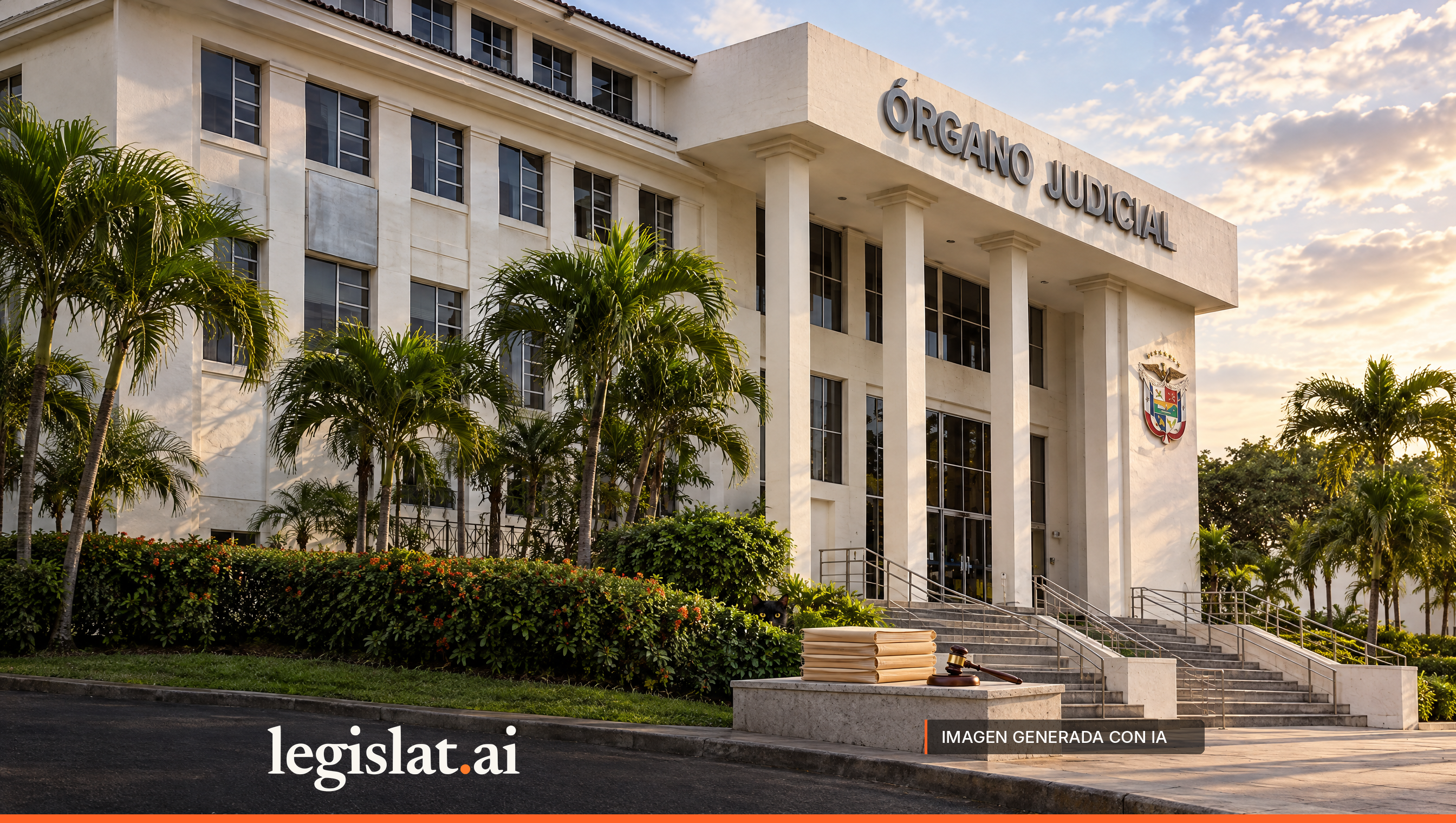
The full bench of the Supreme Court of Justice upheld, in a ruling dated September 18, 2026, the constitutional amparo granted to a defendant accused of domestic violence against the decision of a pretrial judge (juez de garantías) of the Second Judicial Circuit of Panama, San Miguelito seat. At the intermediate hearing on December 16, 2025, the judge had excluded five testimonies offered by the defense. The First Superior Court of the First Judicial District granted the amparo, and the San Miguelito Regional Prosecutor's Office appealed that ruling.
According to the ruling, the defense offered those witnesses to establish self-defense under Article 32 of the Criminal Code, a justification that requires, among other conditions, an unlawful aggression. The judge ruled them not conducive to the case because, in her view, the case was not meant to determine whether the complainant had attacked the defendant and because admitting them could revictimize her.
The Court explains that Article 347 of the Code of Criminal Procedure gives the pretrial judge control over evidence at the intermediate hearing, with five grounds for exclusion (evidence that is irrelevant, not conducive, repetitive, superfluous or unlawful) and a duty to state the reasons orally. It concludes that the judge's reasoning exceeded that preliminary review and anticipated an assessment that belongs to the trial court, thereby limiting the right to present evidence and the right of defense, which the Court links to the due process guarantee of Article 32 of the Constitution.
The ruling acknowledges that the Belém do Pará Convention, ratified by Law 12 of 1995, requires the State to protect victims of gender-based violence and to prevent their revictimization, but holds that this duty must be balanced against the defendant's guarantees. It also relies on the principle of freedom of evidence in Article 376 of the Code of Criminal Procedure.
For trial lawyers and prosecutors, the ruling reinforces a standard that could carry weight at intermediate hearings: excluding evidence must rest on a legal ground and not on an anticipated assessment of its value. It could also serve as a reference in other domestic violence cases in which the defense claims self-defense, although each case will depend on its reasoning.
The ruling does not decide the merits of the criminal case. The testimonies remain available for the oral trial, which, according to the Prosecutor's Office, is scheduled for March 27, 2027, and the trial court will determine whether or not they establish the justification. Nexo Capital will follow how this standard is applied in amparo case law.
Research assisted by Sentinel, with editorial verification of official sources. Discover Legislat.ai