Reforma tributaria, presupuesto e incentivos fiscales en Panamá.
Política Fiscal
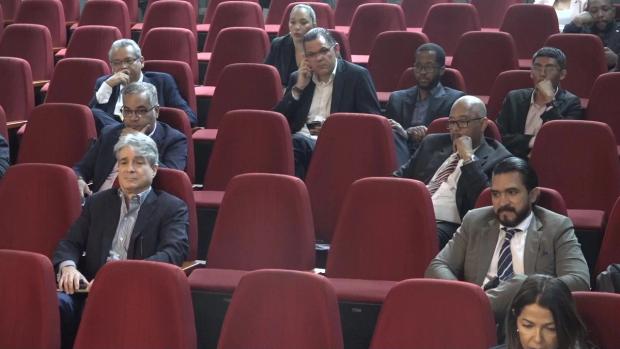
Bill 641 amends the Fiscal Code and requires economic substance for certain foreign-source passive income of multinational groups to retain their tax treatment.
By Mesa de Análisis Económico · June 5, 2026
Política Fiscal
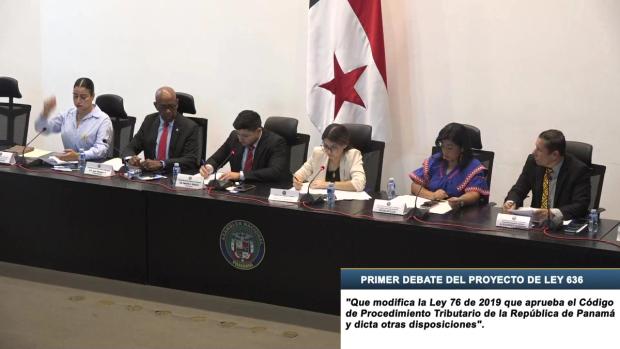
Bill 636 amends the Tax Procedure Code and mandates public access to information on tax incentives in Panama.
By Mesa de Análisis Económico · June 1, 2026
Política Fiscal
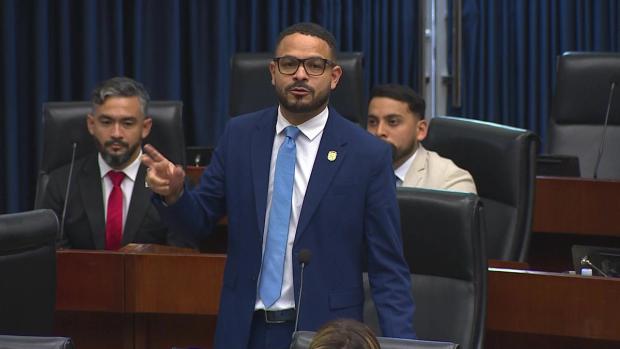
Bill 502 enacts a framework law for the General State Budget and requires that central government investment not fall below 20% of primary expenditure.
By Mesa de Análisis Económico · May 31, 2026
Política Fiscal
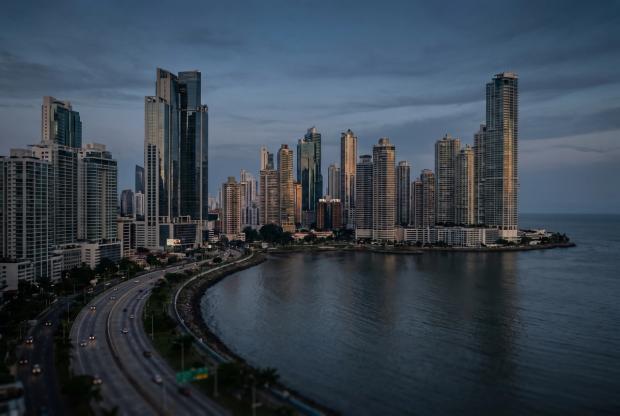
Panama authorizes a loan of up to US$350 million from the IDB to support the budget and a program to improve the Social Security Fund's pension system.
By Mesa de Análisis Económico · May 29, 2026
Política Fiscal
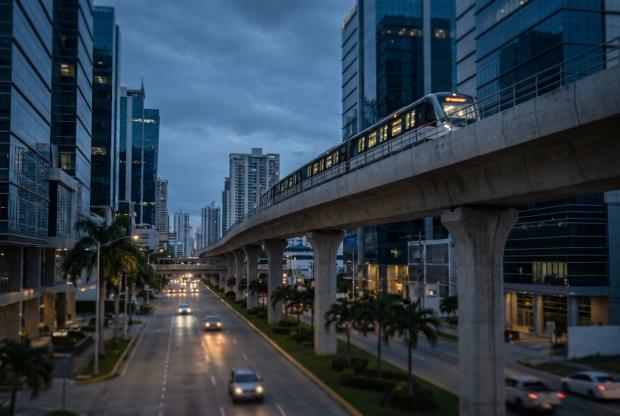
The Cabinet Council authorizes the MEF to issue guarantees of up to US$696.8 million to secure Metro de Panamá's payment obligations.
By Mesa de Análisis Económico · May 21, 2026
Política Fiscal
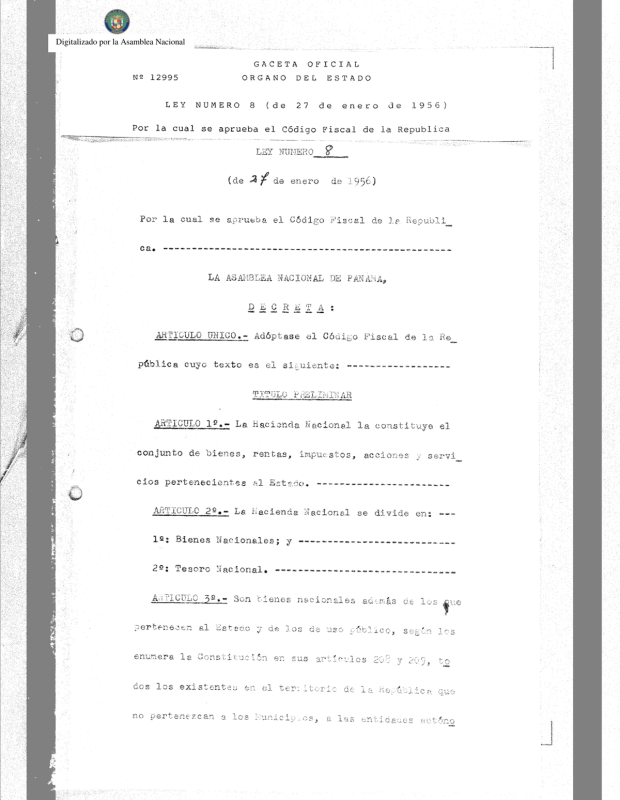
From 1956 to 2023, Panama's Tax Code has been reformed, supplemented, and partially overturned by dozens of laws. Law 8 of 2010 sits at the center of that history: in fewer than five months of enactment it was modified twice, and in 2015 the Supreme Court declared one of its provisions unconstitutional.
By Mesa de Análisis Económico · May 20, 2026

Política Fiscal
Cabinet Decree 252 of 1971 established the Labor Code that remains in force today. More than five decades later, that original text endures — but it has been reformed by successive statutes, revised by Supreme Court rulings, and expanded to cover remote work and pandemic employment protections.
By Mesa de Análisis Económico · May 12, 2026
Política Fiscal
The Government, Justice and Constitutional Affairs Committee rejected Preliminary Bill 442, which proposed amending Law 59 of 1999 to establish peremptory deadlines and sanctions for officials who obstruct investigations into unjustified enrichment.
By Mesa de Análisis Económico · April 30, 2026
Política Fiscal
Bill 630, formerly Pre-Bill 440, proposes measures against lawsuits or legal actions used to intimidate, silence, or exhaust the resources of environmental defenders.
By Mesa de Análisis Económico · April 30, 2026

Política Fiscal
Introduced on January 8, 2026, and adopted by the Finance and Economy Commission on January 27, Bill 504 passed its First Debate on April 8, 2026. It creates the Digital Public Registry administered by ANTAI, makes prior consultation mandatory before awarding contracts, and adds new grounds of legal incapacity to contract with the state.
By Mesa de Análisis Económico · April 16, 2026
Política Fiscal
Law 22 of 2006 is the legal backbone of public procurement in Panama, a market that represents between 10 and 15 percent of GDP. It superseded Law 56 of 1995, was regulated four times by the executive branch, amended or supplemented by at least sixteen laws between 2006 and 2024, and cut back by three rulings from the Supreme Court of Justice. In 2025, two simultaneous bills seek to reform it once again.
By Mesa de Análisis Económico · March 18, 2026
Política Fiscal
Law 6 of 1997 established the regulatory and institutional framework for the provision of public electricity service in Panama. Over 28 years it was amended eleven times, supplemented on ten occasions, regulated by six executive decrees, and partially struck down by a 2015 Supreme Court ruling. This timeline explains how the legal scaffolding of Panamanian electricity was built—and continues to be built.
By Mesa de Análisis Económico · February 13, 2026
Política Fiscal
The General Administrator of the National Public Services Authority, Zelmar Rodríguez de Massiah, approved on January 19, 2026 the tariff schedule for ETESA's public electricity transmission service for the period July 1, 2025 through June 30, 2029, published in Official Gazette 30454 on January 29, 2026.
By Redacción Nexo Capital · January 29, 2026

Política Fiscal
Bill 301 proposes legalizing short-stay tourist lodging in Panama, where it currently operates extralegally, subjecting it to the ten percent ITBMS, Income Tax and the National Tourism Registry.
By Mesa de Análisis Económico · January 7, 2026
Política Fiscal
The Council of Cabinet approved on June 10, 2025 Resolution No. 58, published in Official Gazette 30298-A on June 11, 2025, which adds numeral 22 to Cabinet Resolution 60 of 2015 to authorize additional state contributions to the Tariff Stabilization Fund (FET) of up to B/.170,000,000, aimed at preventing a sharp increase in electricity bills for end customers between July and December 2025.
By Mesa de Análisis Económico · June 11, 2025
Política Fiscal
The Ministry of Health introduced Bill 163 on November 6, 2024. Spanning 526 pages and approved in Third Debate on March 13, 2025, the text amends, adds to, and repeals articles of Law 51 of 2005 to create the Composite System with a reformed Mixed Subsystem, a universal non-contributory basic pension, and a new contributions regime.
By Mesa de Análisis Económico · March 19, 2025

Política Fiscal
In a unanimous December 2024 ruling, the Supreme Court of Justice denies the cassation appeal against the judgment ordering the reinstatement of a worker with motor disability, holding that an employer's refusal to accept the Social Security Fund's fitness certification constitutes constructive dismissal and violates the protection granted by Law 42 of 1999.
By Mesa de Análisis Económico · January 22, 2025

Política Fiscal
The National Assembly enacted Law 445 on October 28, 2024, reforming the Social Fiscal Responsibility Law and establishing annual deficit limits, a debt anchor of 40% of GDP, and a Fiscal Council with technical autonomy.
By Redacción Nexo Capital · October 29, 2024
Política Fiscal
The Full Bench of the Supreme Court of Justice declared that Article 4 of Executive Decree No. 143 of September 29, 2006, which adopts the consolidated text of Law 26 of 1996 on the Public Services Regulatory Authority, is not unconstitutional. The challenge argued that the precautionary protection afforded to radio, television, and telecommunications concessionaires violated the principle of equality before the law with respect to print and digital media.
By Mesa de Análisis Económico · July 5, 2024
Política Fiscal
The Full Bench of the Supreme Court of Justice declared the claim inadmissible in the constitutional challenge brought against several phrases of the first paragraph of Article 3 of Law No. 280 of December 30, 2021, which regulates the practice of the certified public accountant (CPA) profession. The court, with magistrate Cecilio Cedalise Riquelme as the opinion author, determined on September 5, 2022 that the challenger had not stated the concept of the constitutional violation clearly — an indispensable requirement under article 2560 of the Judicial Code.
By Mesa de Análisis Económico · November 18, 2022
Política Fiscal
The Third Chamber of the Supreme Court of Justice dismissed in July 2022 a contentious-administrative complaint filed by the DGI against the Administrative Tax Tribunal, establishing that the tax authority cannot use that judicial avenue to reverse decisions issued by its own administrative appellate body.
By Mesa de Análisis Económico · July 9, 2022
Política Fiscal
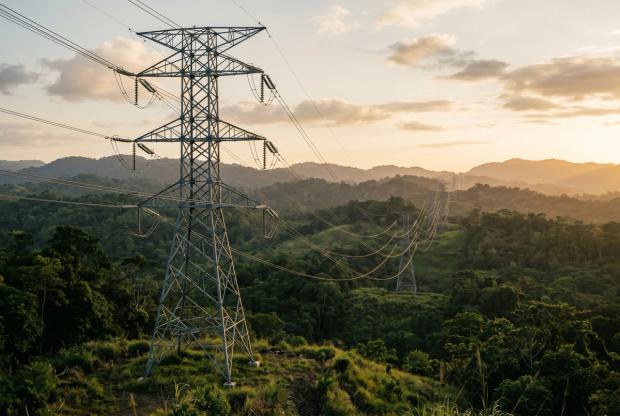
The Full Bench of the Supreme Court of Justice declared that the phrases contained in articles 145 and 146 of Law 6 of February 3, 1997, empowering the Public Services Regulatory Authority — now ASEP — to impose sanctions on electricity service providers, are not unconstitutional. The ruling of August 13, 2012 held that the separation between the investigative function and the decision-making function satisfies the due-process guarantee.
By Mesa de Análisis Económico · August 13, 2012