Ministry of Culture creates a fast-track procedure to approve works on quake-damaged heritage
The resolution allows the Directorate of Cultural Heritage to approve plans without going through the national monuments commission, provided the works are limited to addressing the damage from the October 9 earthquake.
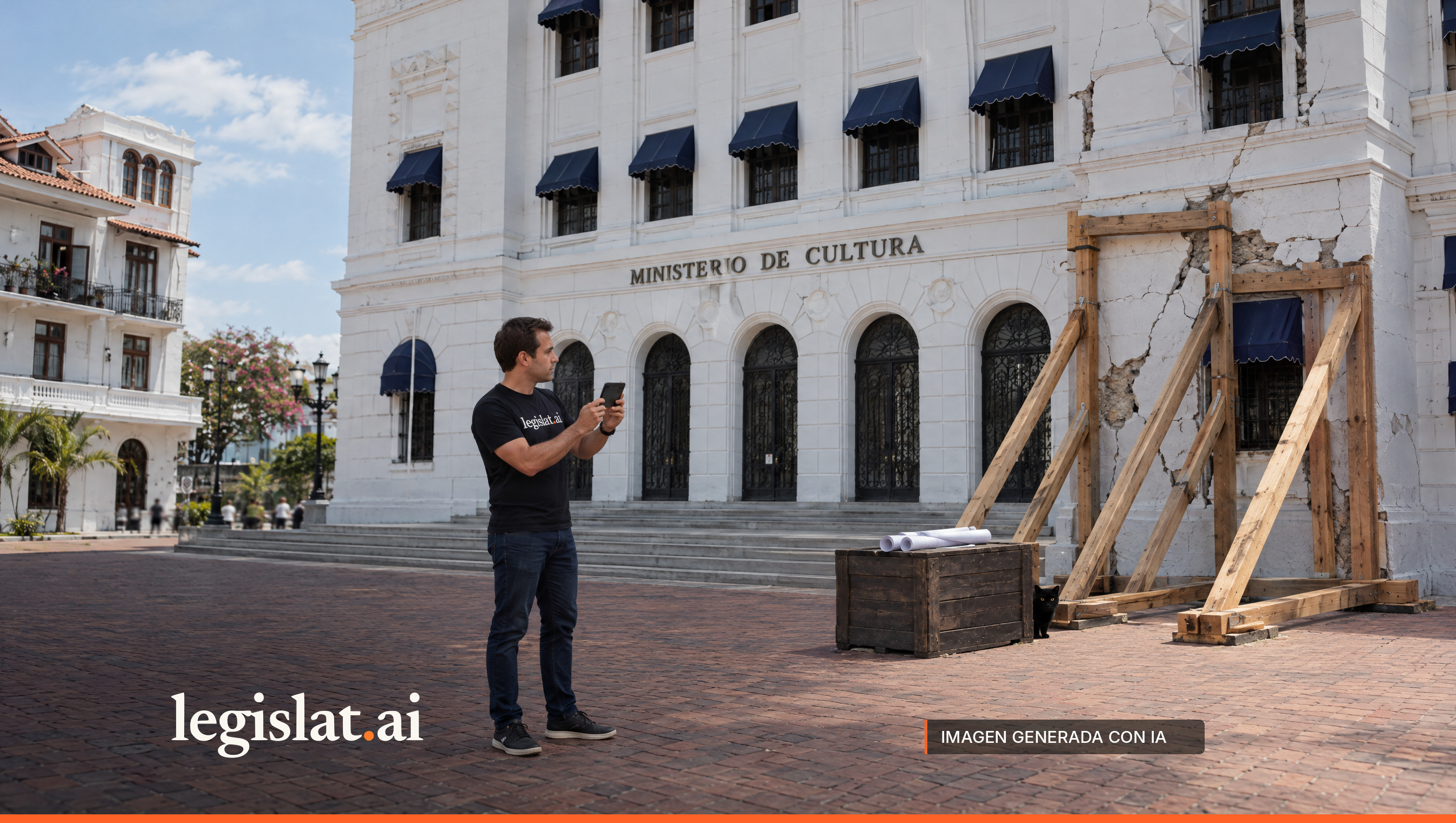
The Ministry of Culture published Resolution No. 183-2026/MC/DNPC, signed on October 15 by the national director of Cultural Heritage, in Official Gazette No. 30652-E of November 13, 2026. The measure creates an exceptional procedure to evaluate and approve intervention plans for tangible cultural heritage assets, whether movable, immovable or archaeological, that were affected by the earthquake of October 9, 2026.
Its first article covers assets officially declared by the State, those recognized as having heritage value by their communities and those subject to protection under the applicable regulations. The second article opens the procedure to public institutions, owners, legal representatives, administrators and accredited attorneys-in-fact. The most significant change is in the fifth article: applications will be evaluated directly by the technical units of the National Directorate of Cultural Heritage, without being submitted to the National Commission on Archaeology and Historic Monuments (CONAMOH), provided they are limited to addressing the earthquake damage. The sixth article also creates a Technical Committee (Mesa Técnica), with staff from that directorate and from the ministry's Infrastructure Office, to speed up the evaluation.
The resolution also sets technical rules. The third article requires the participation of a restoration architect and, where there is structural work, of a qualified civil engineer. It calls for traditional techniques and materials compatible with the originals, and only allows partial demolitions in the event of imminent danger of collapse and with technical justification. Emergency measures may not include remodeling or reconstruction that goes beyond stabilizing and protecting the property. The fourth article lists the documentation: preliminary technical report, photographic record, architectural survey, intervention plans, descriptive report and execution schedule, among others.
For owners of old houses, churches, museums and buildings in historic centers in the affected areas, the fast track could shorten the time between the damage and the stabilization work. It is also likely to increase demand for restoration architects, structural engineers and conservators, profiles that the procedure makes mandatory.
The scope has limits. The eighth article excludes buildings or objects that were not affected by the earthquake, and the recitals clarify that heritage approval does not replace the permits of other competent entities. The seventh article empowers the directorate to inspect the execution of the works. The resolution does not set response deadlines or allocate funds for the works. Nexo Capital will follow up on the application of this procedure and on the first approvals issued by the Technical Committee.
Research assisted by Sentinel, with editorial verification of official sources. Discover Legislat.ai