Agriculture Ministry declares a thrips found in Tierras Altas and Boquete a quarantine pest
Resolution No. OAL-183-ADM-2026 places Frankliniella occidentalis under official control, requires growers to allow inspections and extends control to risky plant imports.
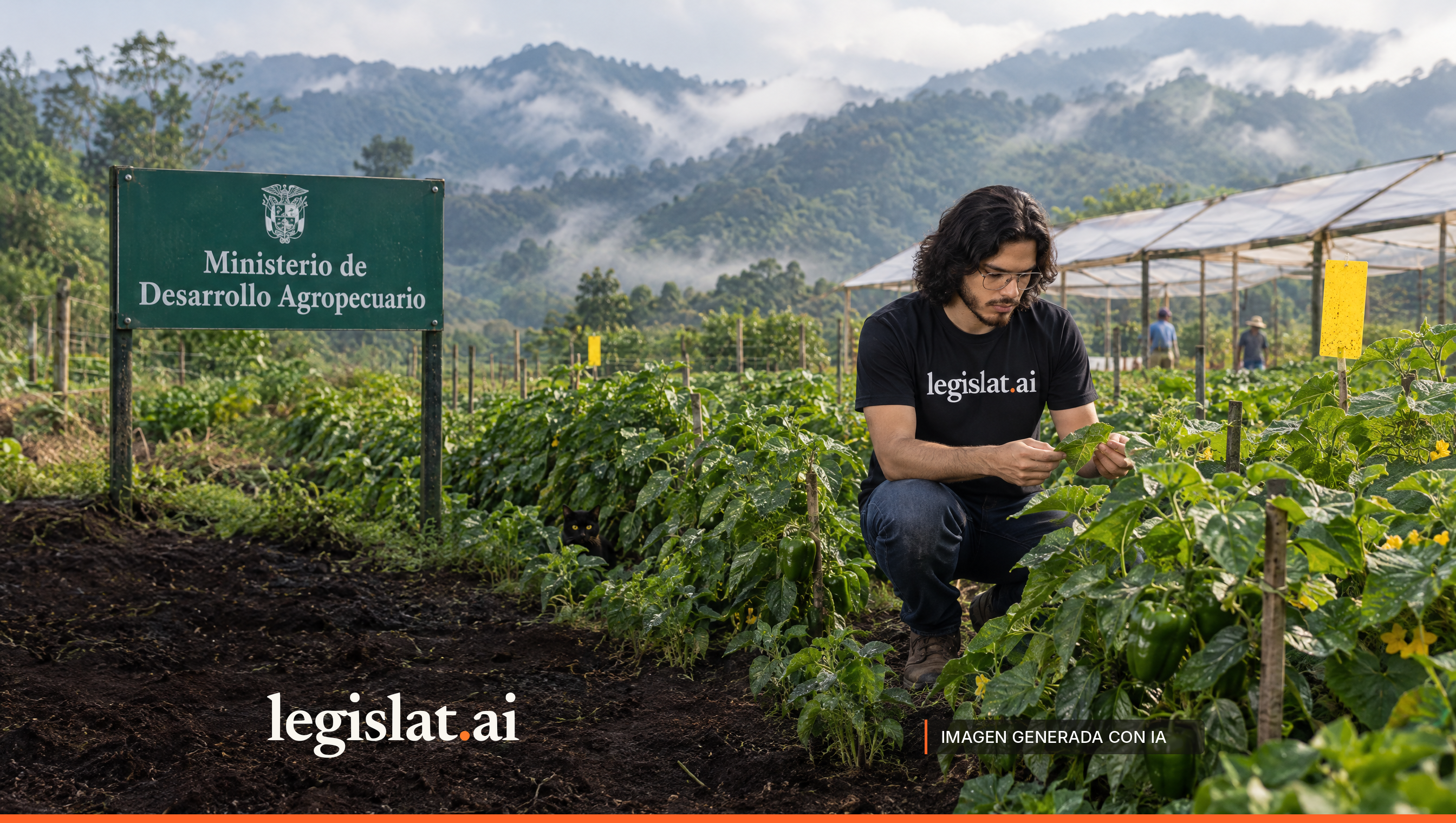
The Ministry of Agricultural Development (MIDA) declared Frankliniella occidentalis, a species of thrips, a quarantine pest that is present, not widely distributed and under official control. It did so through Resolution No. OAL-183-ADM-2026 of October 19, 2026, published in Official Gazette No. 30654 on November 17, the date from which it takes effect under its sixth operative paragraph.
According to the recitals, surveillance by the National Directorate of Plant Health (DNSV) has confirmed since 2012 its presence only in the districts of Tierras Altas and Boquete, in Chiriquí. Surveys carried out during the thrips outbreaks of 2023 and 2025 identified at least seven species of that order in the country, mainly affecting cucurbits and solanaceous crops, but this species remained restricted to those production sites. MIDA describes it as polyphagous, invasive and an efficient vector of viruses of the genus Orthotospovirus, and notes frequent interceptions in imported fresh vegetables, ornamental plants and cut flowers.
The second paragraph tasks the DNSV with an action plan for the management, control and containment of the pest, in coordination with the Agricultural Innovation Institute (IDIAP), the Executive Directorate of Agricultural Quarantine and the Directorate of Agriculture. The third paragraph extends that plan to plants, plant products and other regulated articles intended for import that pose a risk, as well as to plant production and abandoned plots that are sources of infestation. The fifth paragraph requires farm owners and occupants to allow inspections, sampling and controls, and to apply the technical recommendations.
For vegetable growers in Chiriquí, the declaration implies greater surveillance and possible management obligations on their plots. For importers of fresh vegetables, ornamental plants and flowers, it could translate into additional phytosanitary requirements, depending on the technical assessment made by the DNSV. The stated objective is to mitigate the risk of introducing Orthotospovirus viruses that are not present in Panama.
The specific measures depend on the action plan, which the resolution neither publishes nor subjects to a deadline. The fourth paragraph outlines its lines of work: research, diagnosis, population monitoring, detection in areas where the pest is not present and control actions. Nexo Capital will follow up on the publication of the plan and the requirements applied to imports.
Research assisted by Sentinel, with editorial verification of official sources. Discover Legislat.ai