Bill 308 opens solar energy to tenants and communities without their own rooftops
The bill, approved in First Reading on March 24, 2026, and pending Second Reading, creates remote net metering and solar communities to democratize access to distributed photovoltaic generation in Panama.
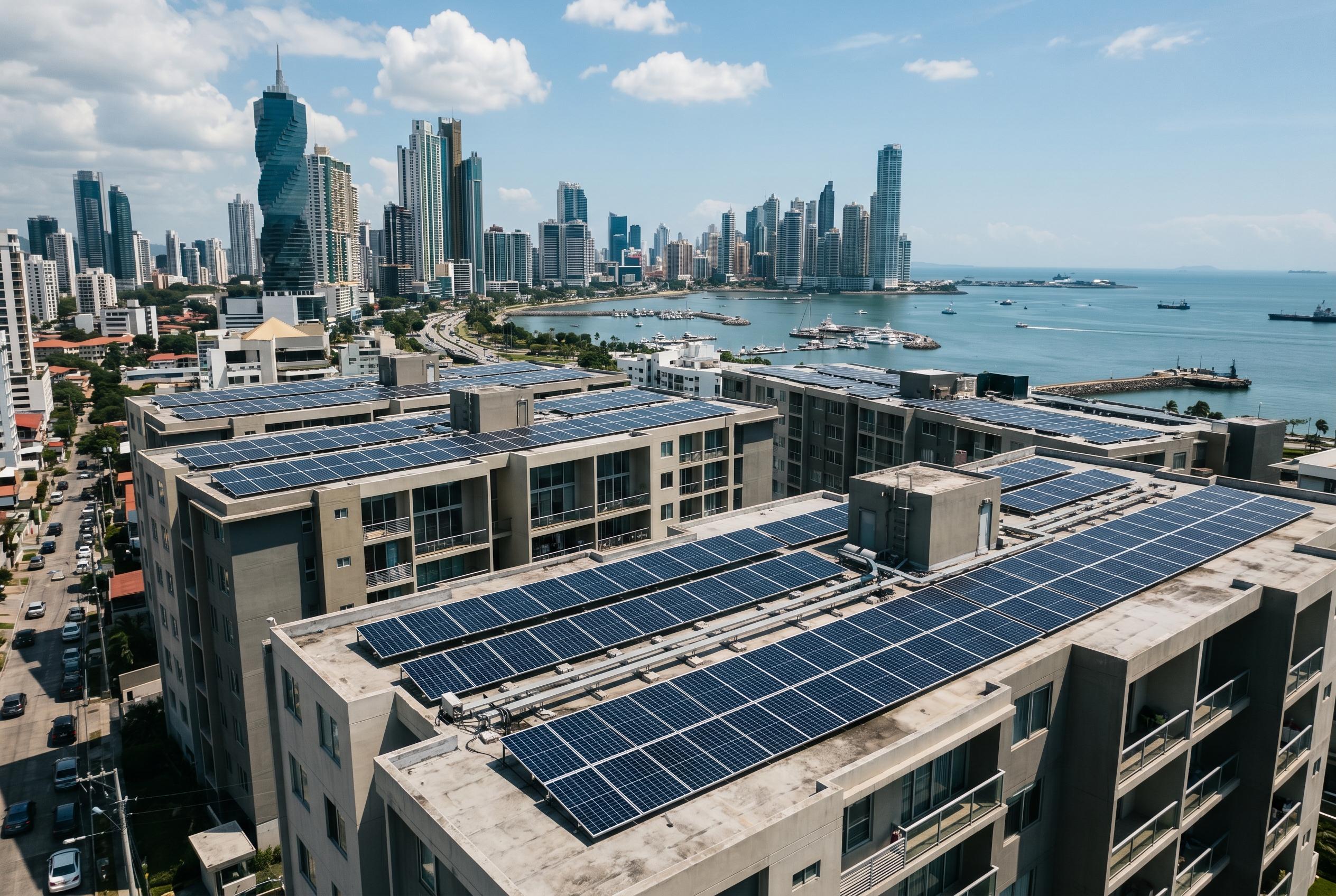
Bill 308, presented on August 6, 2025 by alternate legislator Gabriel Andrés Solís Arias of circuit 8-4 and sponsored by the Commerce and Economic Affairs Committee on August 19, proposes a structural expansion of Panama's current renewable energy regime. The 26-article text seeks to introduce two legal concepts so far absent from national legislation: remote net metering and the solar community. Approved in First Reading on March 24, 2026, the bill has been pending Second Reading since March 26.
Article 1 sets the objective of establishing the regulatory framework for remote net metering and solar communities, with the purpose of promoting equitable access to renewable energy and reducing the cost of electricity bills. Article 2 defines remote net metering as the mechanism by which energy generated from a photovoltaic installation located at a point other than the place of consumption is injected into the grid and offset on the user's bill, provided both locations belong to the concession area of the same distribution company. A solar community, for its part, is a grouping of two or more users who share the generation of a common solar plant and receive credits proportional to their participation.
The compensation scheme, regulated by Articles 6, 7 and 8, operates through bidirectional metering. Energy self-consumed instantly is recognized at one hundred percent of the tariff value applicable to the user. Surplus energy injected into the grid is compensated at eighty percent of the generation component of the current regulated tariff, or at the average monthly price of the spot market, as determined by ASEP by resolution. Energy credits derived from those surpluses accumulate for a maximum of twelve consecutive months, after which they automatically expire if unused.
Article 10 establishes a minimum monthly solidarity charge, set by ASEP, to proportionally cover infrastructure maintenance, backup and operating costs. That charge may not exceed ten percent of the monthly average of the basic residential tariff and must be reviewed through public consultation every three years. Articles 17 and 21 require ASEP to create a single digital platform for real-time registration, management and monitoring of generation and consumption, and to guarantee users free access to their metering data.
Article 25 gives ASEP a period of no more than twelve months, counted from the law's promulgation, to issue the technical and administrative regulations needed for its effective application. This regulatory period is the main implementation risk identified: until the regulations are in force, users will not be able to register installations or access credits. The Panama Solar Chamber had been consulted during the explanatory memorandum, which also cites the Paris Agreement and the 2030 Agenda as international reference frameworks. The bill aligns its logic with the National Energy Plan 2015-2050 and seeks to correct the exclusion that the current net metering scheme imposes on tenants, residents of multifamily buildings and rural communities.
Sources
- Proyecto de Ley 308 — Que democratiza el acceso a la energía renovable mediante el neteo remoto y las comunidades solares (Asamblea Nacional)