Supreme Court rejects a resort's amparo that invoked data protection against court-ordered evidence
The full Court upheld the inadmissibility of the amparo against a labor court order seeking workers' bank data, deeming the claim a matter of ordinary legality.
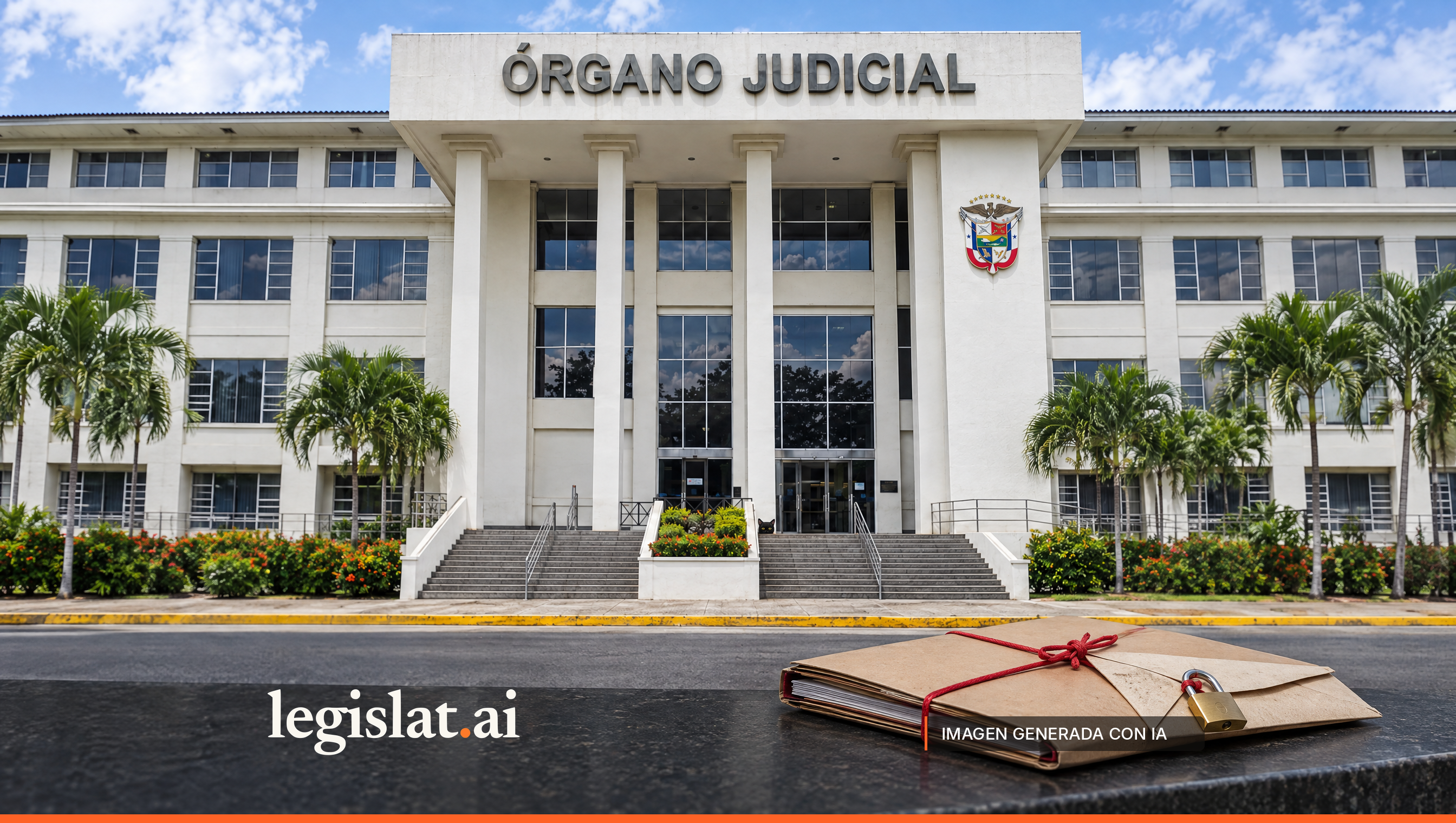
The full bench of Panama's Supreme Court of Justice upheld, in a September 16, 2026 ruling written by Justice Carlos E. Villalobos Jaén, the decision of the First Superior Court of the First Judicial District that declared inadmissible the constitutional amparo filed by Summit Golf & Resort, S.A. The action challenged Order for Further Evidence No. 66 of February 12, 2026, issued by the Second Labor Court of the First Section. The case is Entry 80625-2026, and the decision became final on October 29, 2026.
The company argued that the judge ordered evidence on his own initiative after the hearing and requested bank account data of current and former employees. It claimed this violated due process and the right to personal data protection recognized in article 42 of the Constitution, Law 81 of 2019 and its regulations, and that the lower court had not examined that second claim.
The Court replied that the company merely transcribed provisions of Law 81 without explaining why the judicial authority lacked the power to request that information or how the order exceeded its powers. It recalled that evidence ordered by a judge on his own initiative is an exercise of jurisdictional authority to clarify the facts. It added that disagreement over its necessity or scope is a question of legality for ordinary procedural remedies, unless there is manifest arbitrariness or a direct violation of fundamental rights, which it did not find in this case.
For employers and compliance officers, the ruling suggests that invoking Law 81 is not enough, on its own, to block a court's request for personnel data through an amparo. The Court did not decide whether the handling of that data complies with the data protection law; it upheld the inadmissibility of the action because of defects in how it was framed. Arguments about the relevance of the evidence must be raised within the labor proceeding, through ordinary remedies.
The case leaves open how the data of third parties outside a lawsuit will be protected once it is handed to the court, a point this ruling did not resolve. Nexo Capital will follow rulings that interpret Law 81 in relation to court requests.
Research assisted by Sentinel, with editorial verification of official sources. Discover Legislat.ai