The Court rejects a challenge to the Comptroller General's precautionary measures rules
The Full Court found that the action challenged the entire regulation but argued only against its Article 8; the suspension of payments and seizure of assets remain in force.
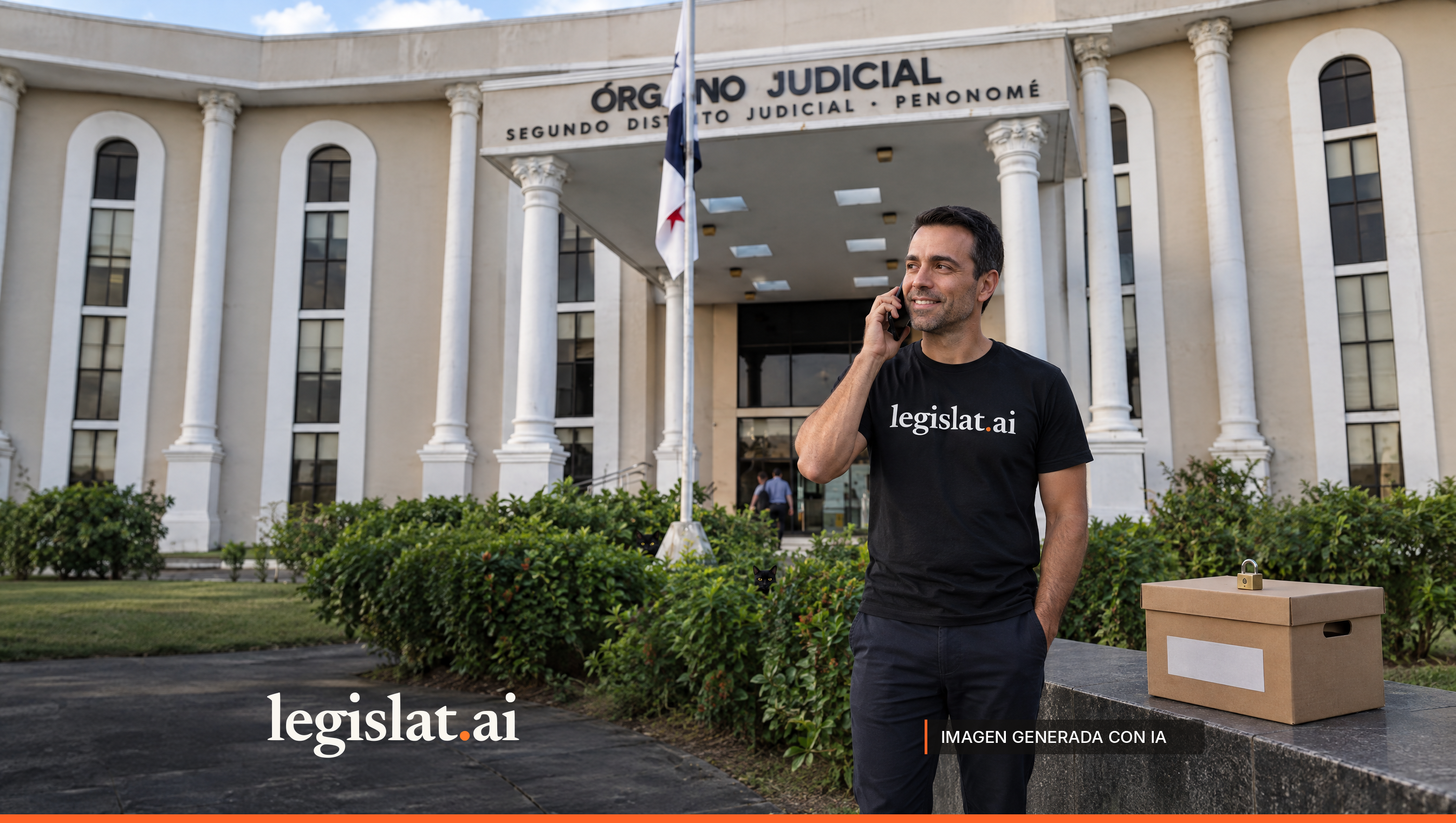
The Full Court of the Supreme Court of Justice declined to admit the unconstitutionality complaint against Resolution No. 3126-2025-Leg/PJ of September 23, 2025, published in Official Gazette No. 30376-B of September 30, 2025. Through that resolution, the Office of the Comptroller General of the Republic approved its Precautionary Measures Regulation. The decision, dated August 17, 2026 and drafted by Justice Ariadne Maribel García Angulo, became final on September 11, 2026; Justice Carlos E. Villalobos Jaén signed with a separate reasoned opinion.
The regulation implements Article 29 of Law 32 of 1984, as amended by Law 351 of 2022. Its Article 2 allows the Comptroller General to suspend payments charged to the National Treasury and salaries or allowances of fund handlers, officials or persons linked to an irregularity, and to order the seizure of their assets. Article 3 extends those measures to linked individuals or legal entities. Article 8 provides that the measures are processed without hearing the person under investigation, up to the provisional amount of the loss, and that a request for reconsideration does not suspend their execution; Article 9 requires them to be referred to the Court of Accounts immediately after being adopted.
The four plaintiffs argued that the regulation turns an oversight function into a judicial one and encroaches on the powers of the Court of Accounts, in violation of Articles 32, 47, 280 and 281 of the Constitution and Articles 8 and 21 of the American Convention on Human Rights. The Court replied that the action claimed to challenge the entire resolution but its arguments focused on Article 8; that it did not explain why those powers are incompatible with the Constitution; and that the debate over which authority should order precautionary measures is largely a matter of legality. It added that Article 27 of Law 67 of 2008, cited in the complaint, uses the word «podrá» (may) and does not require such measures to always be requested from the Court of Accounts.
For contractors, suppliers and public servants who handle public funds, the consequence is that the procedure remains in force: an audit can lead to the suspension of payments or the seizure of assets, including establishments or businesses; Article 7 requires the custodian to keep them operating. The refusal to admit does not resolve the merits, so a better-grounded complaint aimed at Article 8 could raise the issue again.
Nexo Capital will follow the application of the regulation and any new actions against it.
Research assisted by Sentinel, with editorial verification of official sources. Discover Legislat.ai
Sources
- Resolución de la Corte Suprema de Justicia, Pleno, que no admite la demanda de inconstitucionalidad contra la Resolución 3126-2025-Leg/PJ de la Contraloría, entrada 61107-2026 (17/08/2026)
- Resolución N° 3126-2025-Leg/PJ de 23/09/2025, Contraloría General de la República, Reglamento de Medidas Precautorias, Gaceta Oficial N° 30376-B (30/09/2025)