Public entities that already paid can correct their delinquent status with the Revenue Directorate
Resolution 201-8177 responds to the lack of interoperability among e-Tax 2.0, ISTMO and SICUT, which leaves entities that already paid listed as delinquent under code 250.
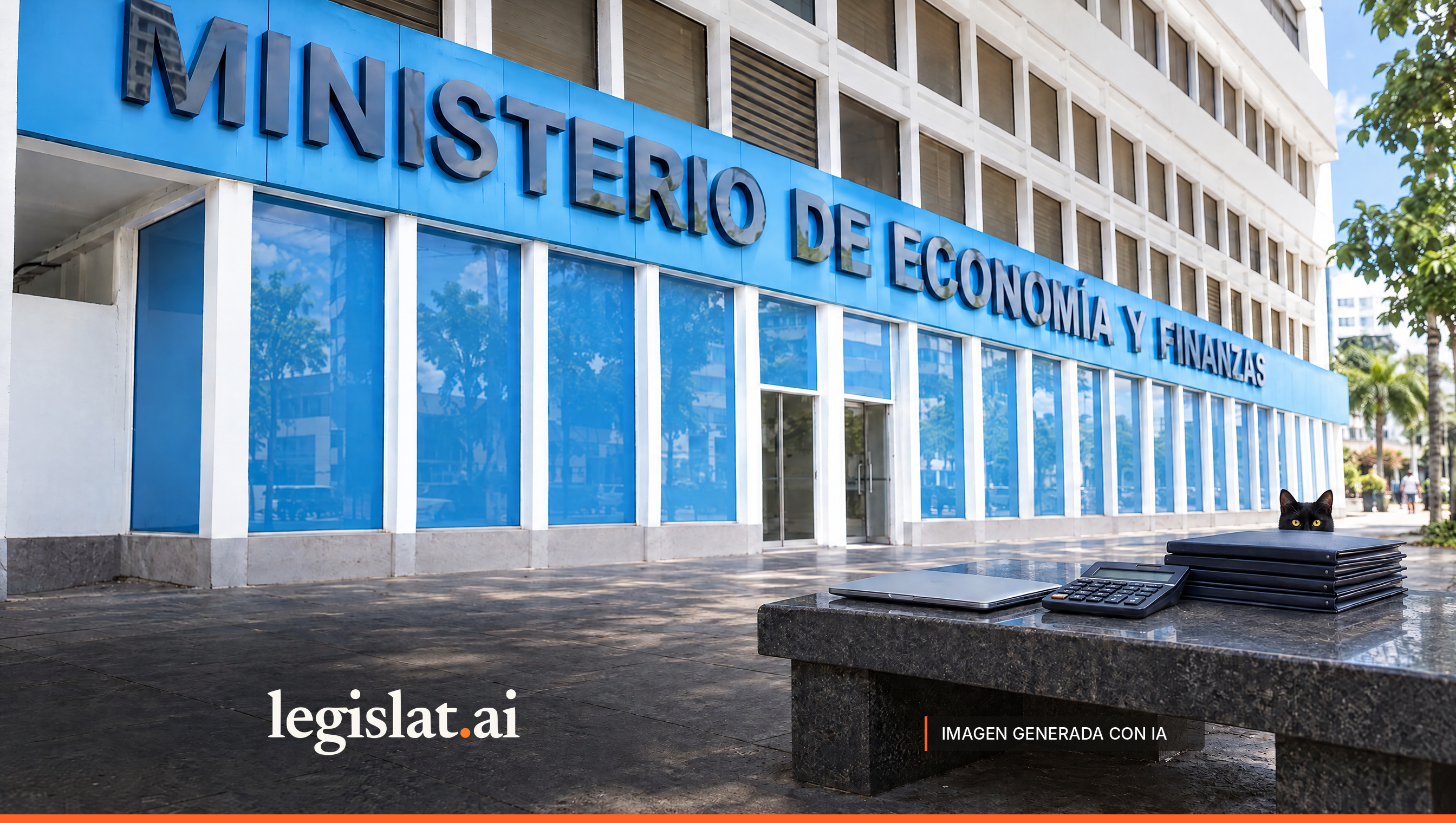
The General Directorate of Revenue (DGI) of the Ministry of Economy and Finance (MEF) published in Official Gazette No. 30642-A of October 26, 2026 Resolution 201-8177, signed on October 14, 2026 by the Director General of Revenue, Camilo A. Valdés M. The resolution establishes a procedure for state entities affiliated with the ISTMO or SICUT systems to request reconciliation of their withholding payments of the Tax on the Transfer of Tangible Movable Goods and the Provision of Services (ITBMS) and the update of their account statement under code 250.
The recitals explain the origin of the problem. The e-Tax 2.0 system, managed by the DGI; ISTMO, of the National Accounting Directorate, and SICUT, of the General Treasury Directorate, lack the interoperability needed to automatically transmit the ITBMS amounts withheld by public entities and their payment to the National Treasury. As a result, those payments are not reflected in e-Tax 2.0 and the entities appear with delinquent balances.
The second resolved clause sets the requirements for the request: a petition addressed to the Director General of Revenue and signed by the entity's legal representative; credentials proving that representation; a copy of his or her identity card; a certification of the amount paid to the Treasury as withholding, issued by the National Accounting Directorate or the General Treasury Directorate depending on the system the entity uses, and a detailed report of the withholdings applied to its suppliers. Under the third resolved clause, the DGI will verify the consistency between what was withheld, paid and recorded and, where appropriate, will order the update through a reasoned resolution.
For suppliers to the State, cleaning up these records could make it easier to reconcile the withholdings applied by contracting entities with what appears before the tax authority, a point that often generates differences in audits and in the crediting of the tax. For the MEF, the measure seeks to have the tax account statement of public entities reflect payments already made, without yet solving the lack of connection among its own systems.
The fourth resolved clause warns that receiving a request does not mean accepting it. The resolution takes effect upon publication and, under its fifth resolved clause, admits no appeal in the administrative channel. What remains is for each entity to submit its file and for the DGI to decide case by case. Nexo Capital will follow the reconciliation of ITBMS withholdings in the public sector.
Research assisted by Sentinel, with editorial verification of official sources. Discover Legislat.ai