Health ministry makes its new leishmaniasis guide mandatory for public and private clinics
The resolution standardizes surveillance, diagnosis, treatment and vector control criteria across all health facilities, adapted to their level of complexity.
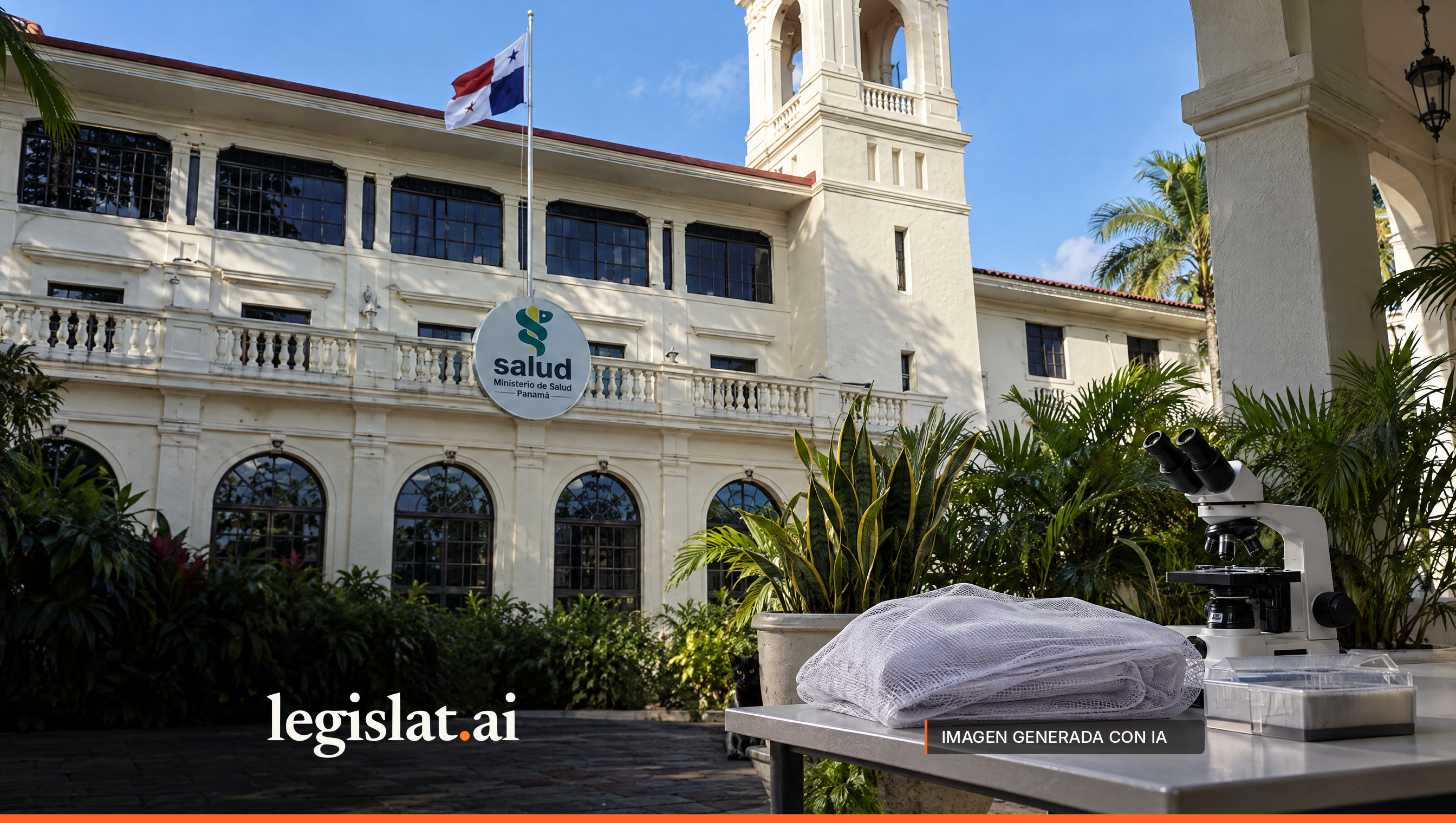
The Ministry of Health (MINSA) published Resolution No. 875 of October 28, 2026, signed by Minister Fernando Boyd Galindo, in Official Gazette No. 30651-A of November 12, 2026. It approves the Guide for the Comprehensive Management of Leishmaniasis in Panama. The resolution takes effect upon promulgation, under its article five.
Article one incorporates the guide as an annex to the resolution, and article two makes it mandatory in all public and private health facilities in the country, adapted to the complexity level and capacity of each. The guide organizes care into chapters on epidemiological surveillance, laboratory diagnosis, treatment by type of disease, entomological surveillance and vector control, and prevention and control of zoonoses. It also includes mandatory reporting forms for cases, outbreaks and deaths.
The guide supports the measure with its own data. Panama recorded 1,510 cases in 2025, a rate of 33.0 per 100,000 inhabitants, compared with 1,281 cases in 2024. Bocas del Toro had the highest incidence (113.1), followed by the Ngäbe Buglé comarca, Coclé and Veraguas. According to the guide, about two thirds of diagnoses over the past six years were clinical only, and no deaths were recorded between 2020 and 2025.
For private clinics, hospitals and laboratories, the guide moves from technical reference to enforceable standard: they will have to align their diagnosis, treatment and reporting protocols with the official criteria, within their capacity. For companies with staff in rural, farming or construction sites in endemic areas, the guide's section on personal protection with clothing, repellents and bed nets is relevant and could inform their occupational health programs, although it imposes no direct obligations on them.
The effect depends on implementation. Article three tasks the Directorate General of Public Health, with the health regions and the Social Security Fund (CSS), with dissemination, ongoing training and compliance supervision. Article four provides for reviewing the guide within five (5) years at most, or sooner if the epidemiological situation requires it. The resolution sets no specific penalties for non-compliance. Nexo Capital will follow its implementation in the regions with the highest incidence.
Research assisted by Sentinel, with editorial verification of official sources. Discover Legislat.ai