Panama regulates imports of research and laboratory reagents
Resolution 857, effective October 22, links research imports of RUO, ASR and UGL reagents to a project registered in RESEGIS and approval from an accredited bioethics committee.
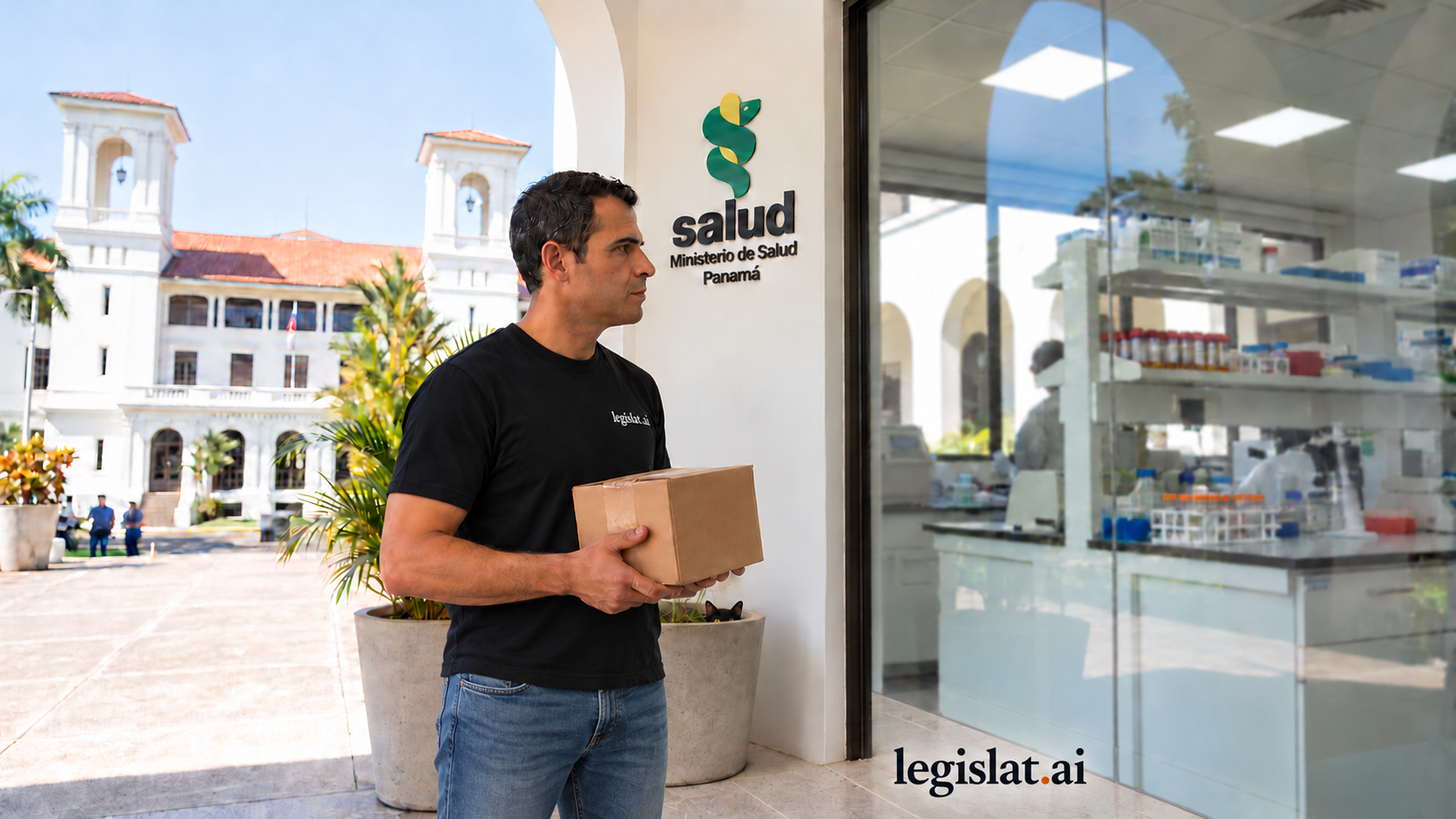
The Ministry of Health issued Resolution 857 of October 20, 2026, published in Official Gazette 30640-C on October 22, 2026, and effective upon promulgation. It establishes requirements and procedures for importing and overseeing three types of laboratory reagents exempt from health registration: research-use-only reagents for human-origin samples (RUO), analyte-specific reagents (ASR), and general laboratory-use reagents (UGL).
Article 1 establishes the resolution’s purpose and mandatory nationwide application. Article 3 makes research import permits conditional on each reagent being supported by a project registered in RESEGIS and approved by an accredited bioethics committee. Applications must include the principal investigator’s request, the manufacturer’s insert and the invoice. Article 4 places processing with the National Directorate of Medical Devices through RESEGIS, allowing up to three rounds of corrections. Article 5 makes that directorate responsible for authorization, regulation and oversight. These requirements establish the documentation needed for this research import route, rather than replacing it with a general authorization for all laboratory products.
Article 6 provides an additional route: where a public health need exists and no in vitro diagnostic alternative is available, the ministry may authorize these reagents for in vitro use by public or private health institutions. For importers, laboratories, research centers and their advisers, the resolution sets identifiable procedural deadlines and costs. Article 13 allows a maximum of ten working days for a decision once all requirements are complete. Article 15 limits each permit to ninety calendar days and the authorized quantity. Article 12 sets the technical data sheet fee at twenty-five balboas, or fifty balboas for a justified urgent procedure taking five working days; government procedures are exempt from this payment. The decision period is therefore tied to a complete application, not simply the initial submission.
Because the resolution is already effective, attention now turns to its practical operation. Article 11 reserves preparation of the technical data sheet to the National Interinstitutional Technical Committee, and only where no in vitro diagnostic device with a current sheet exists. Article 16 directs businesses seeking public contracts for these products to the National Register of Suppliers, while Article 17 leaves penalties to the applicable rules. The research route and the additional public-health route retain their respective conditions. Nexo Capital will follow implementation of Resolution 857.
Research assisted by Sentinel, with editorial verification of official sources. Discover Legislat.ai