A bill creates a national care program for rare diseases and moves to second debate
The initiative by Deputy Crispiano Adames amends Law 28 of 2014, gives statutory rank to the medical advisory body and requires the inter-sectoral commission to meet; it was approved in first debate on September 23 and moved to second debate on October 1, 2026.

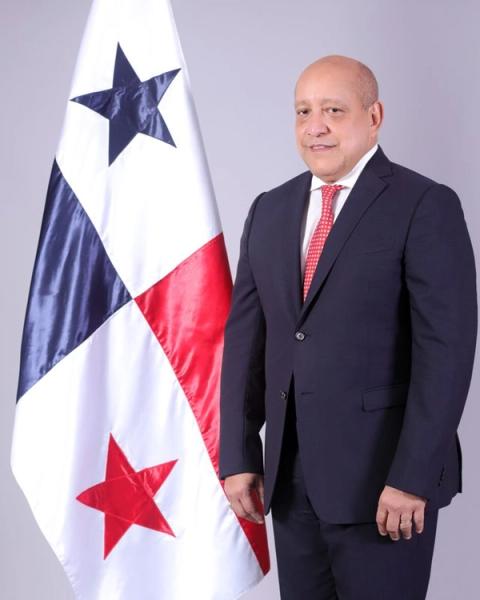
Bill 257, submitted on September 24, 2024 by Deputy Crispiano Adames Navarro (Partido Revolucionario Democrático, circuit 8-3), was approved in first debate on September 23, 2026 by the Labor, Health and Social Development Committee, which Adames himself chairs, and moved to second debate on October 1, 2026. It is not yet law. The initiative amends and adds articles to Law 28 of 2014, which guarantees social protection to the population suffering from rare, infrequent and orphan diseases.
Its article 1 amends article 6 of Law 28 of 2014 and recomposes the Inter-sectoral Commission for the Prevention, Diagnosis, Comprehensive Care and Research for the Treatment of Rare, Infrequent and Orphan Diseases, which will now be made up of representatives of the Ministry of Health, which chairs it, the Social Security Fund, the Ministry of Economy and Finance, the National Secretariat for Disability, patients or organized groups, the pharmaceutical industry with voice only, and a geneticist with voice only, and removes the Office of the First Lady of the Republic from its membership. Article 3 adds article 7-A and requires that commission to meet in ordinary session at least twice a year.
Article 4 adds article 7-B and creates the National Care Program for people with rare, infrequent and orphan diseases, to be regulated by the Ministry of Health. Articles 5 through 8 give statutory rank to the advisory body attached to the program, made up of three medical specialists and a pharmacist appointed by the Ministry of Health for a term of no more than five years (article 7-D), required to meet at least once a month to review cases and assess each patient's treatment (article 7-E). Article 2 reorders the commission's functions, among them assigning the program's budget and updating the official list of diseases.
For the health system, the initiative seeks to unblock the application of Law 28 of 2014, which Law 345 of 2022 had already amended without the Ministry of Health issuing its regulations. Article 1 includes the pharmaceutical industry, with voice only, on the commission, and article 2 tasks that commission with developing financing programs and agreements with public and private entities to administer treatments, as well as promoting pharmacogenomic research for the national production of therapies. For the Social Security Fund, which also sits on the commission, and for insurers, an updated official list and an advisory body that validates each case could clarify which high-cost treatments should be covered, though that effect would depend on the regulations.
The effect is not immediate. The bill must be approved in second and third debate, be sanctioned and promulgated, and article 12 orders the Executive Branch, through the Ministry of Health, to regulate the law within no more than sixty days of its promulgation. Until those regulations exist, the new obligations of the commission and the advisory body will not be operational. Nexo Capital will follow the debates and the regulation of Law 28 of 2014.
Debate stills